Make your own country
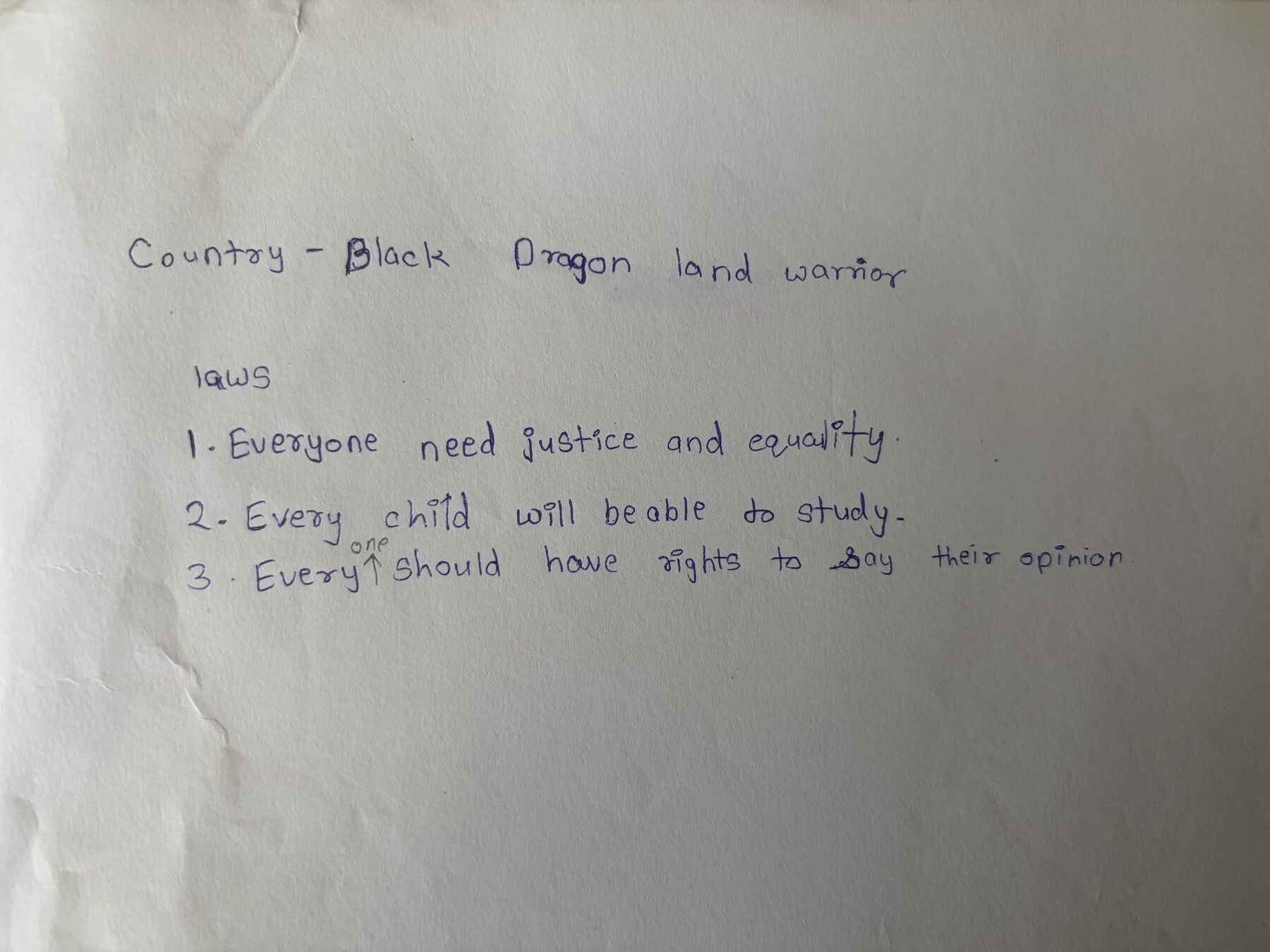
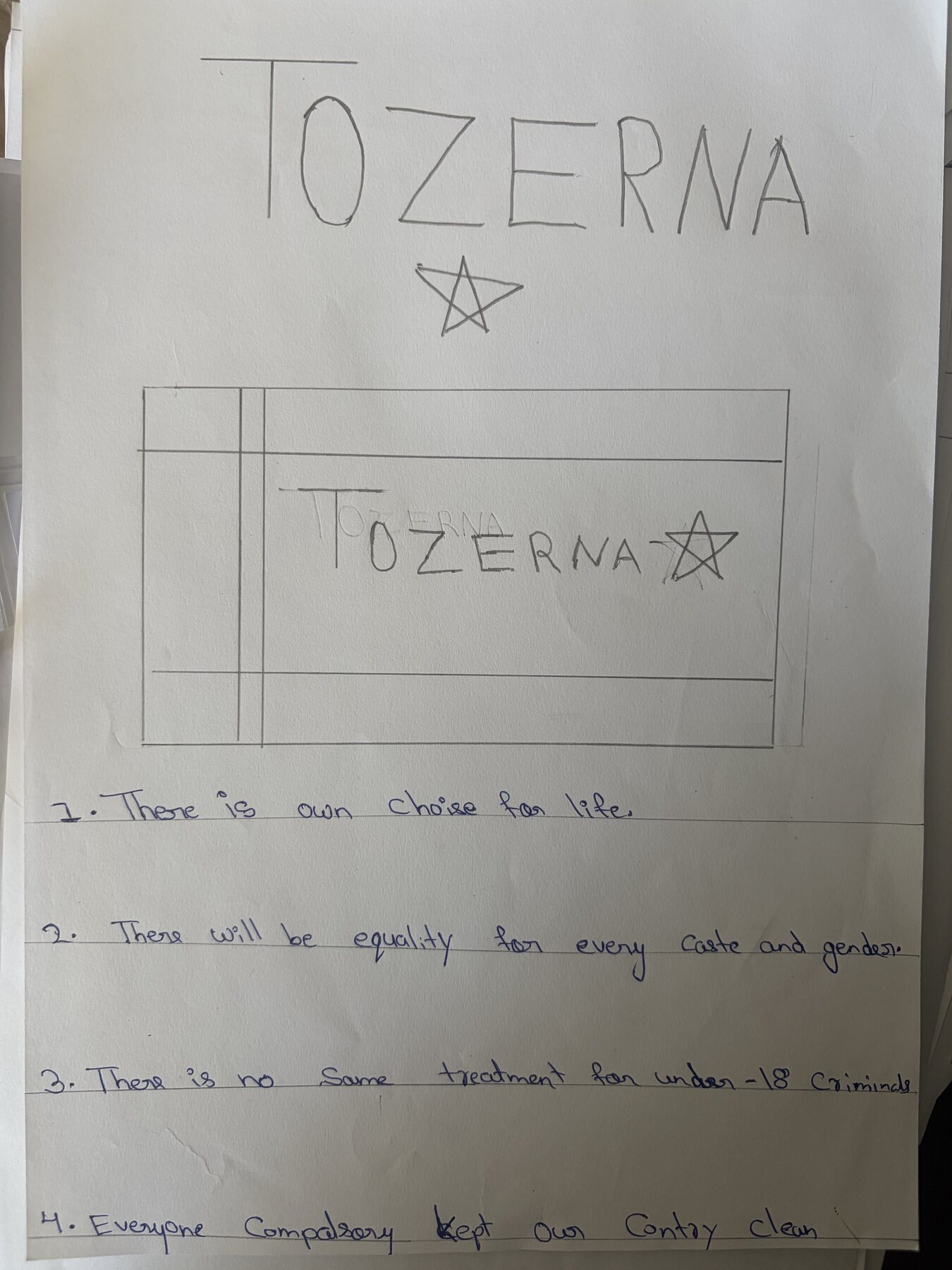
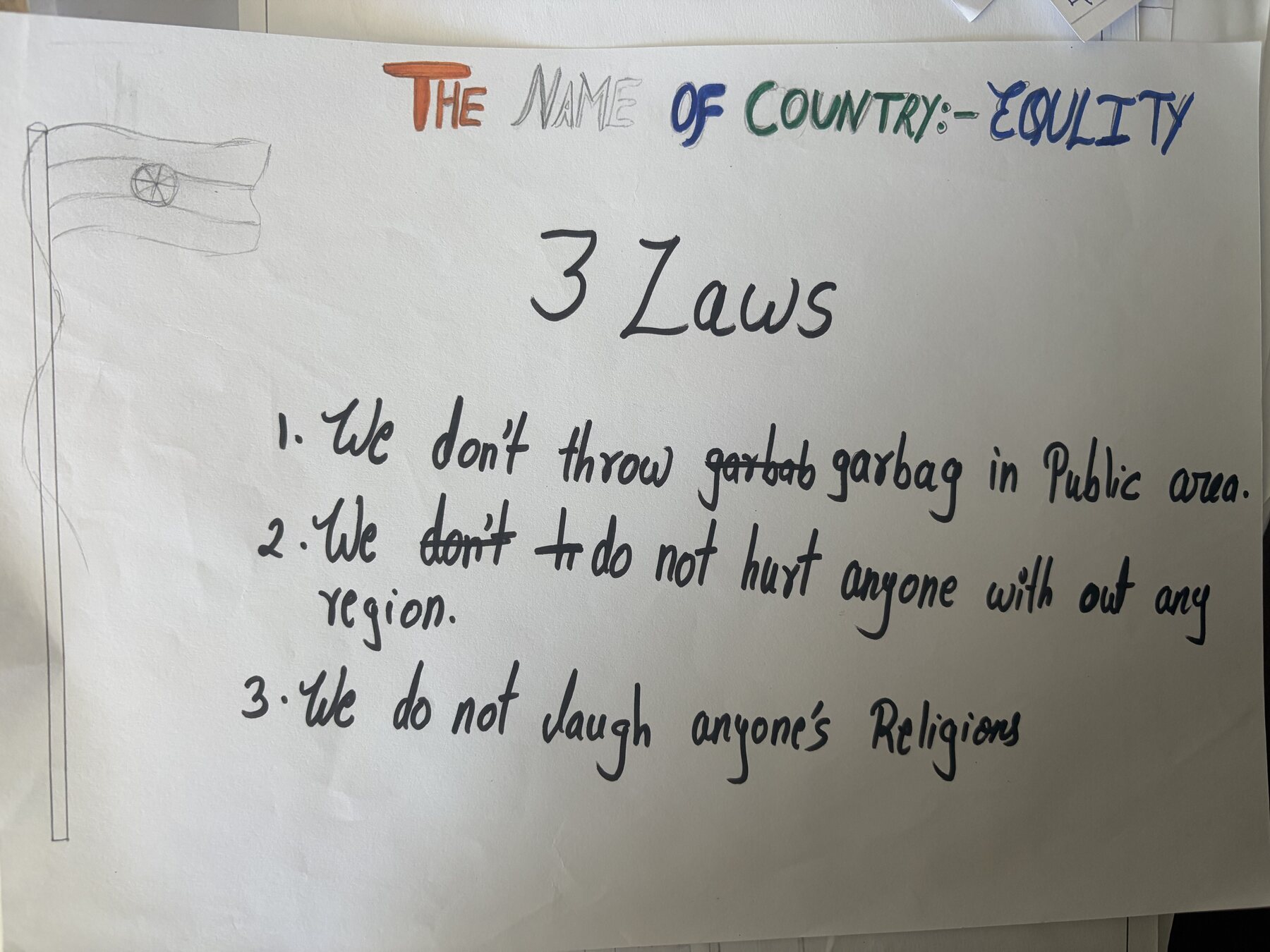
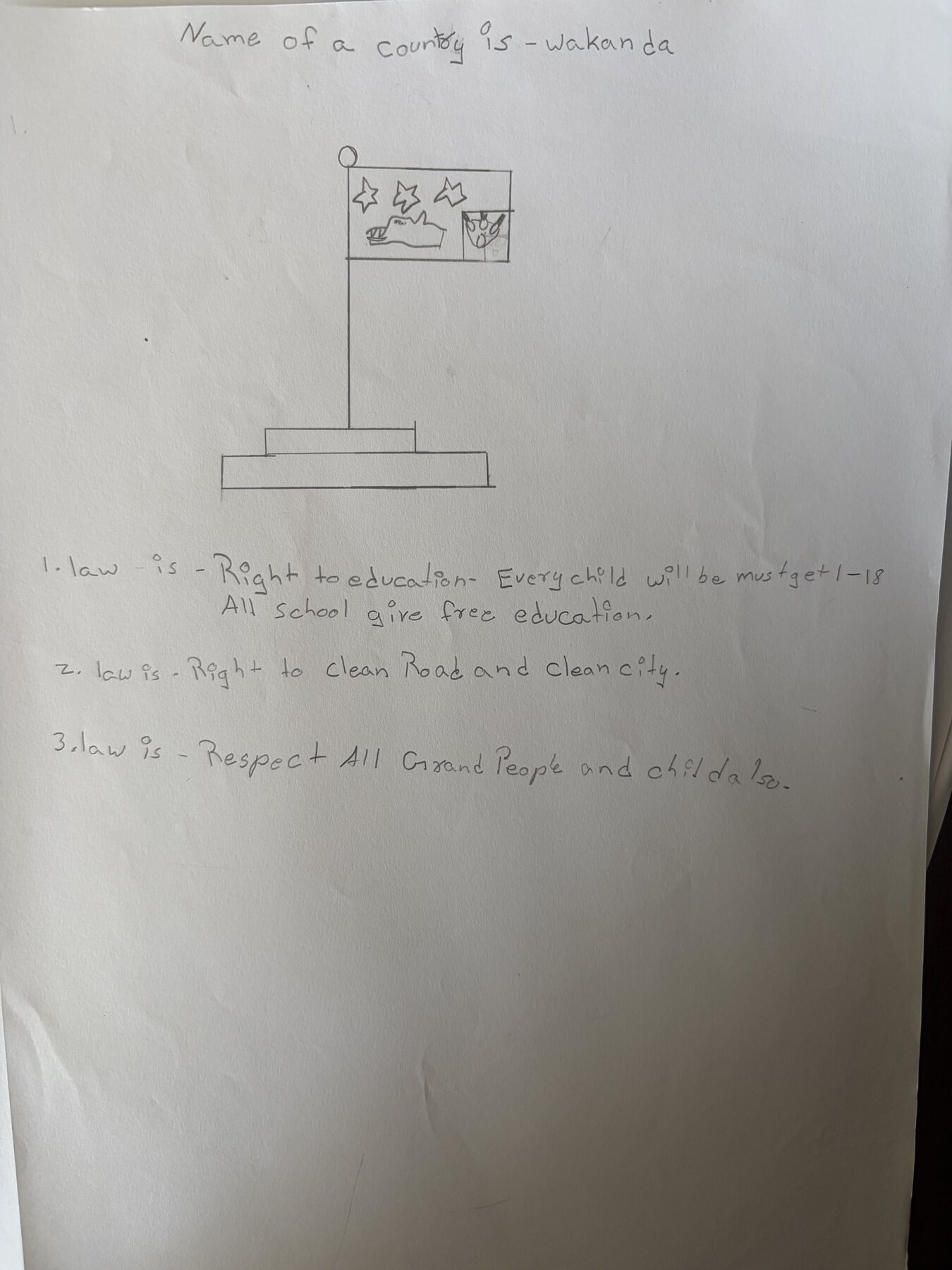
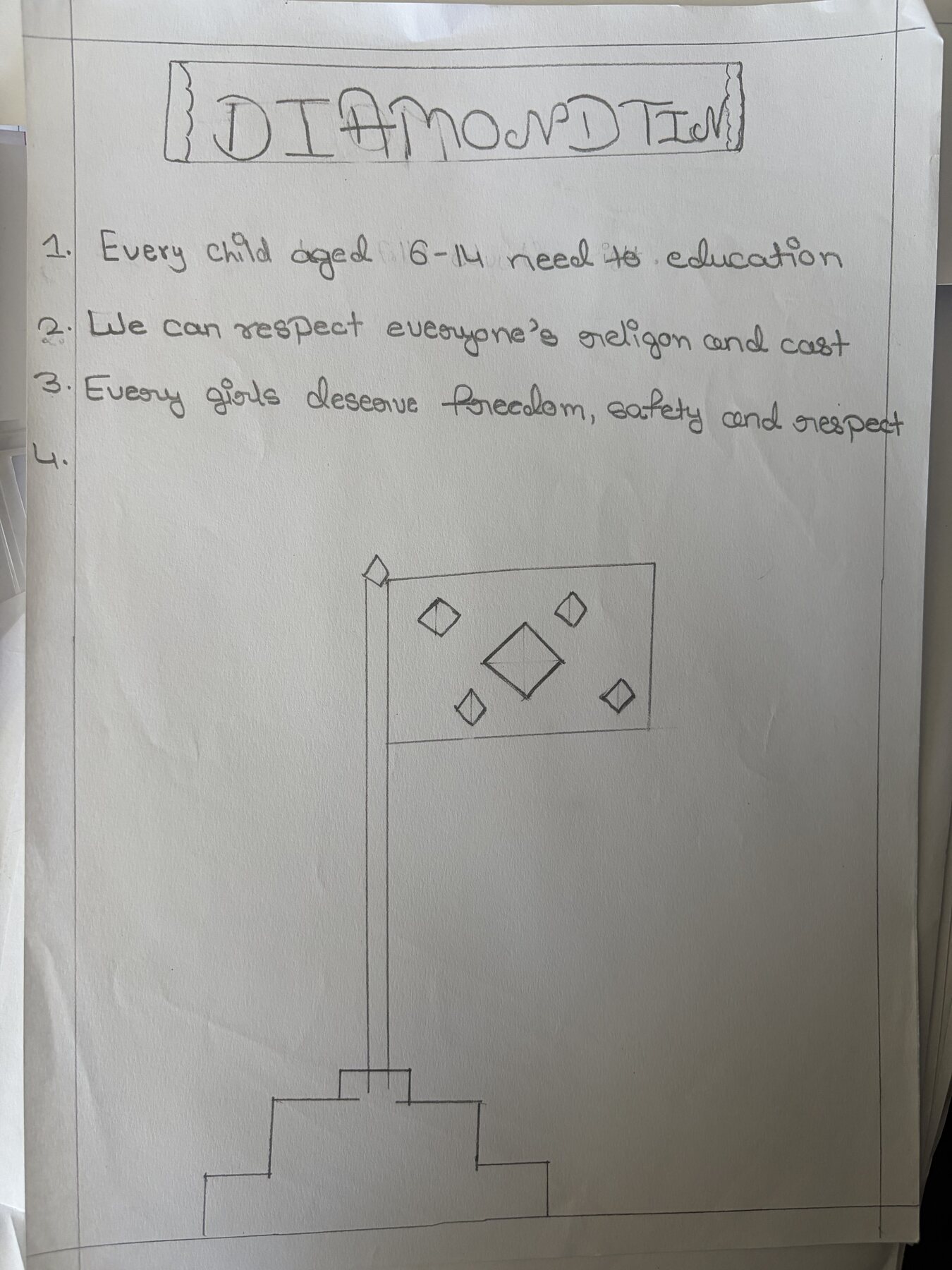
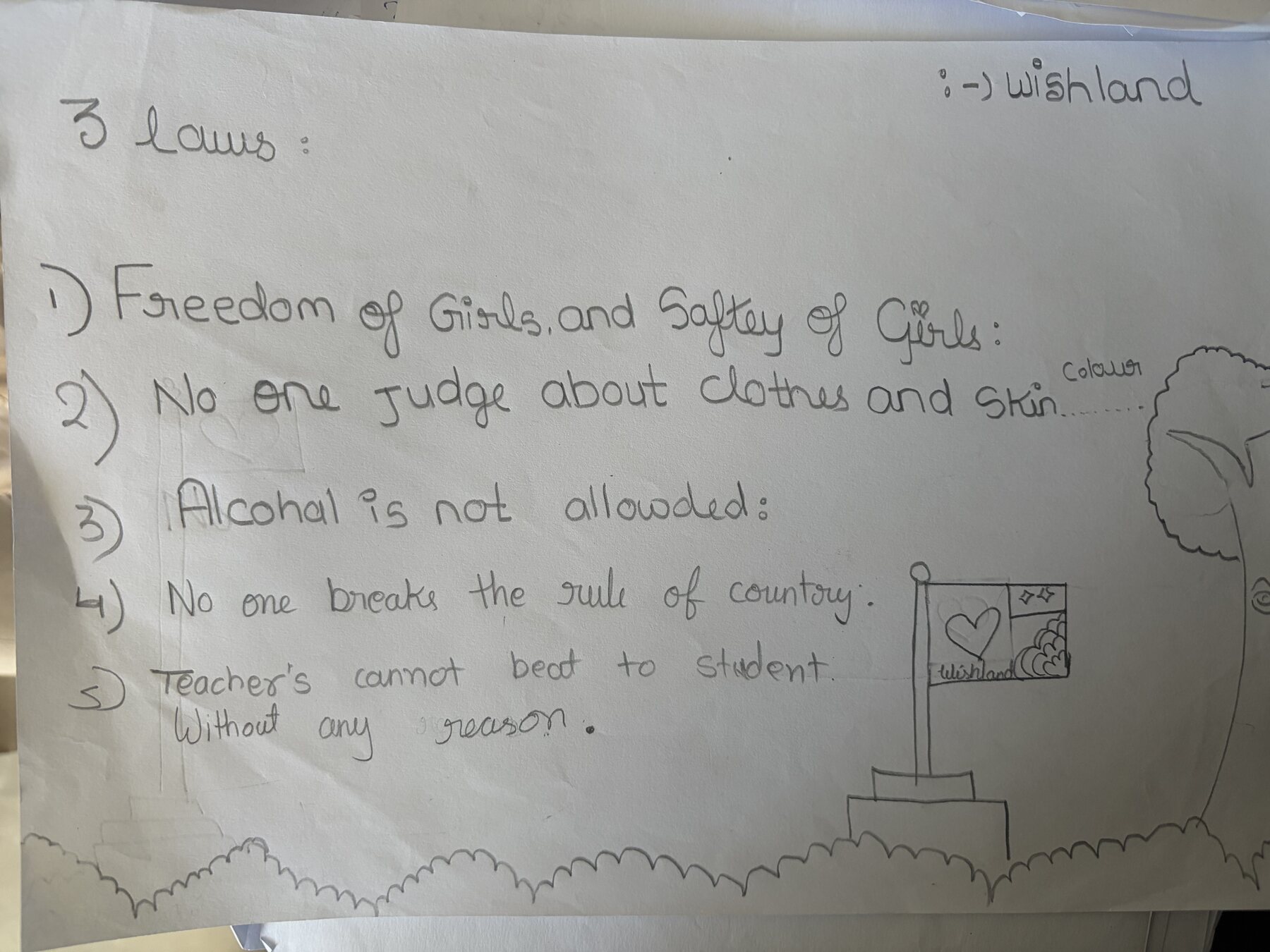
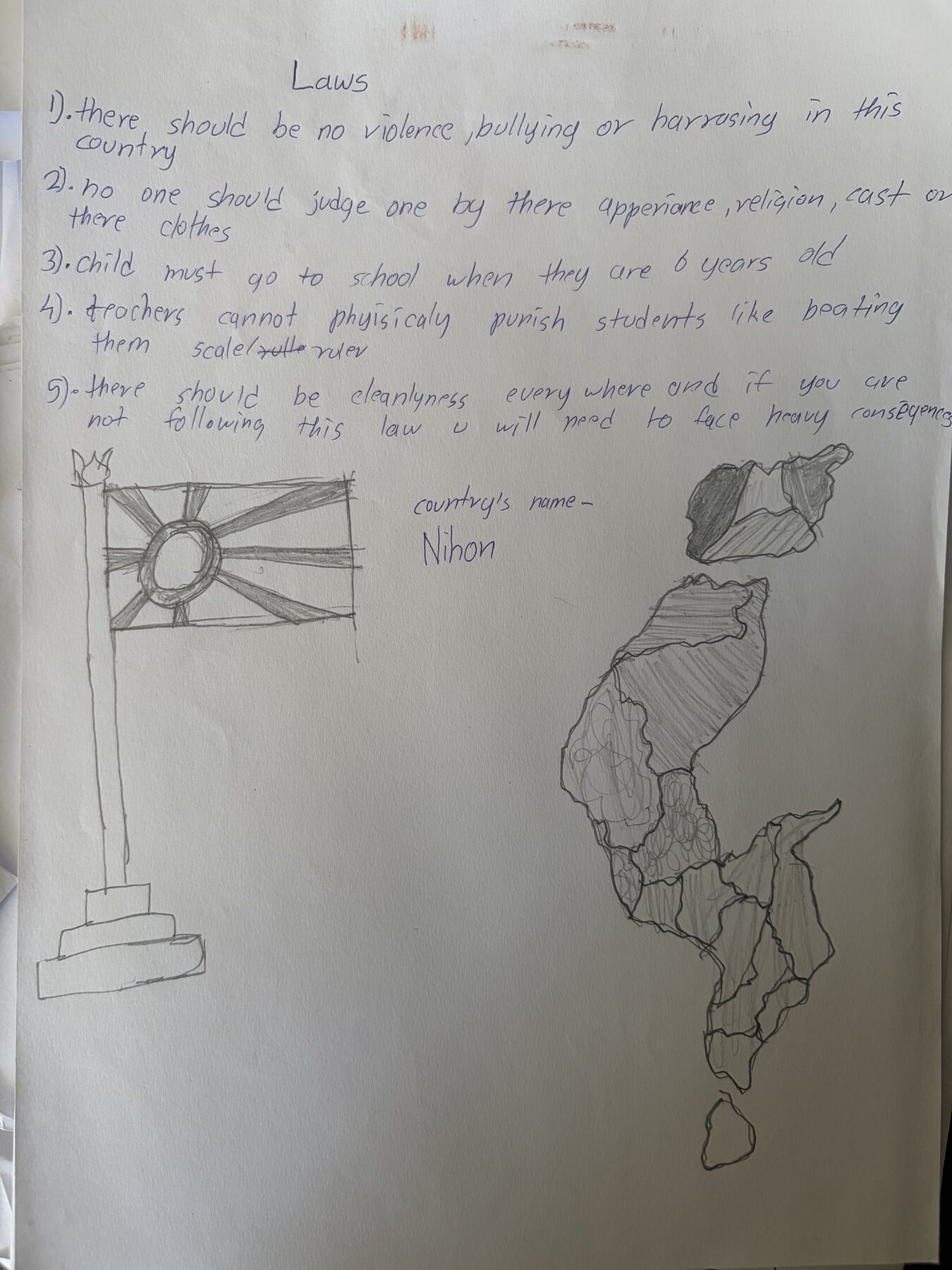
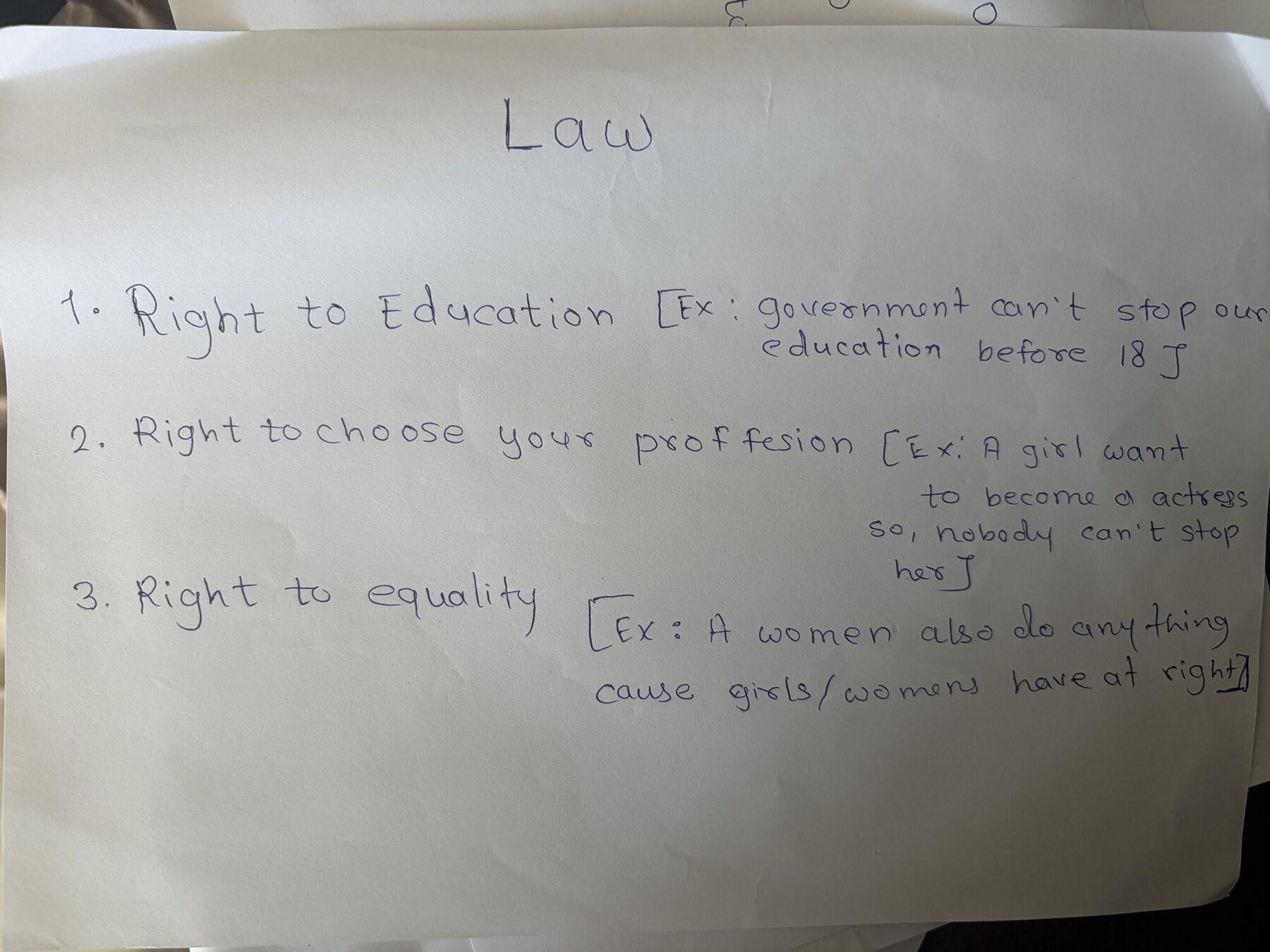
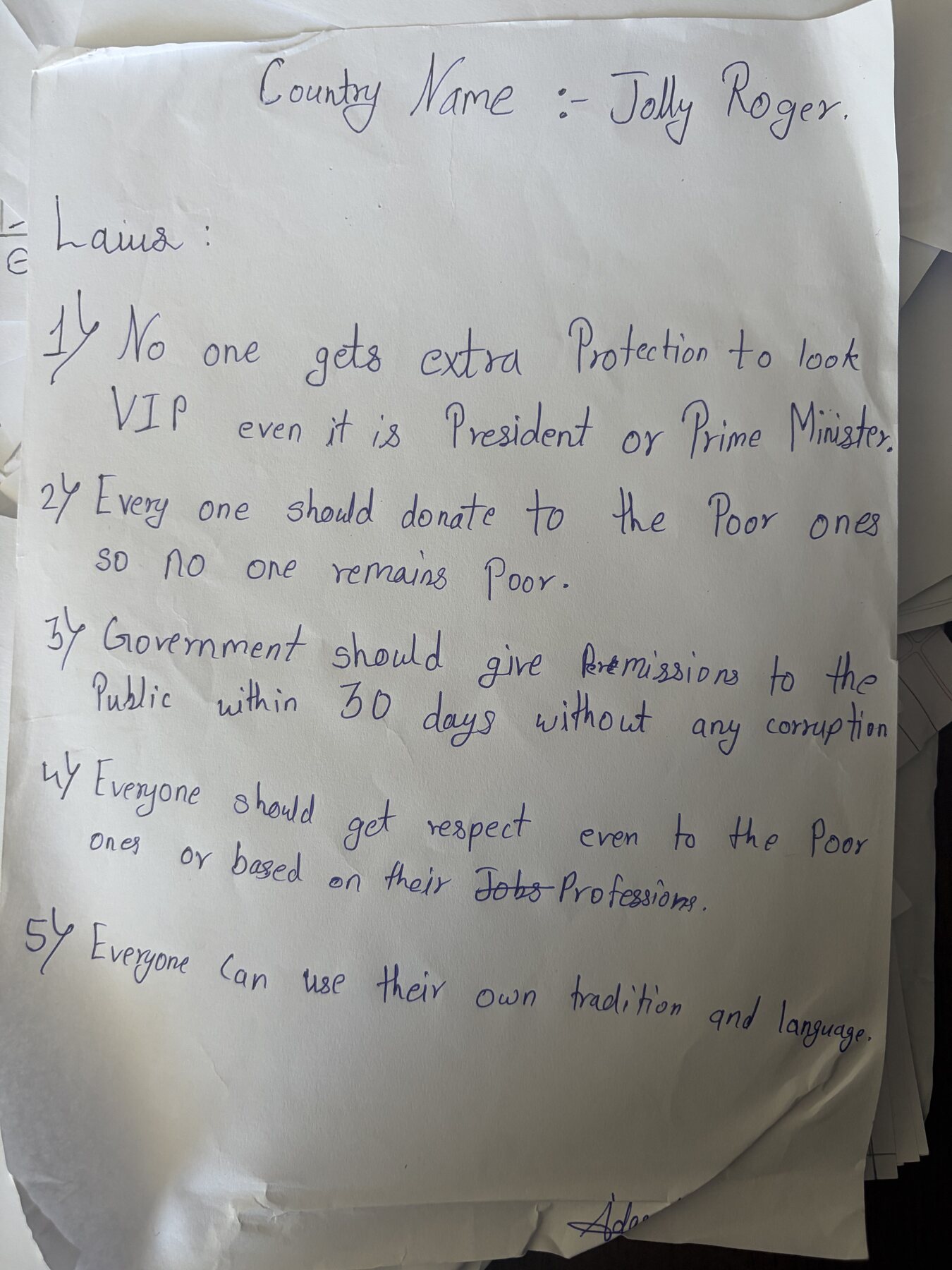
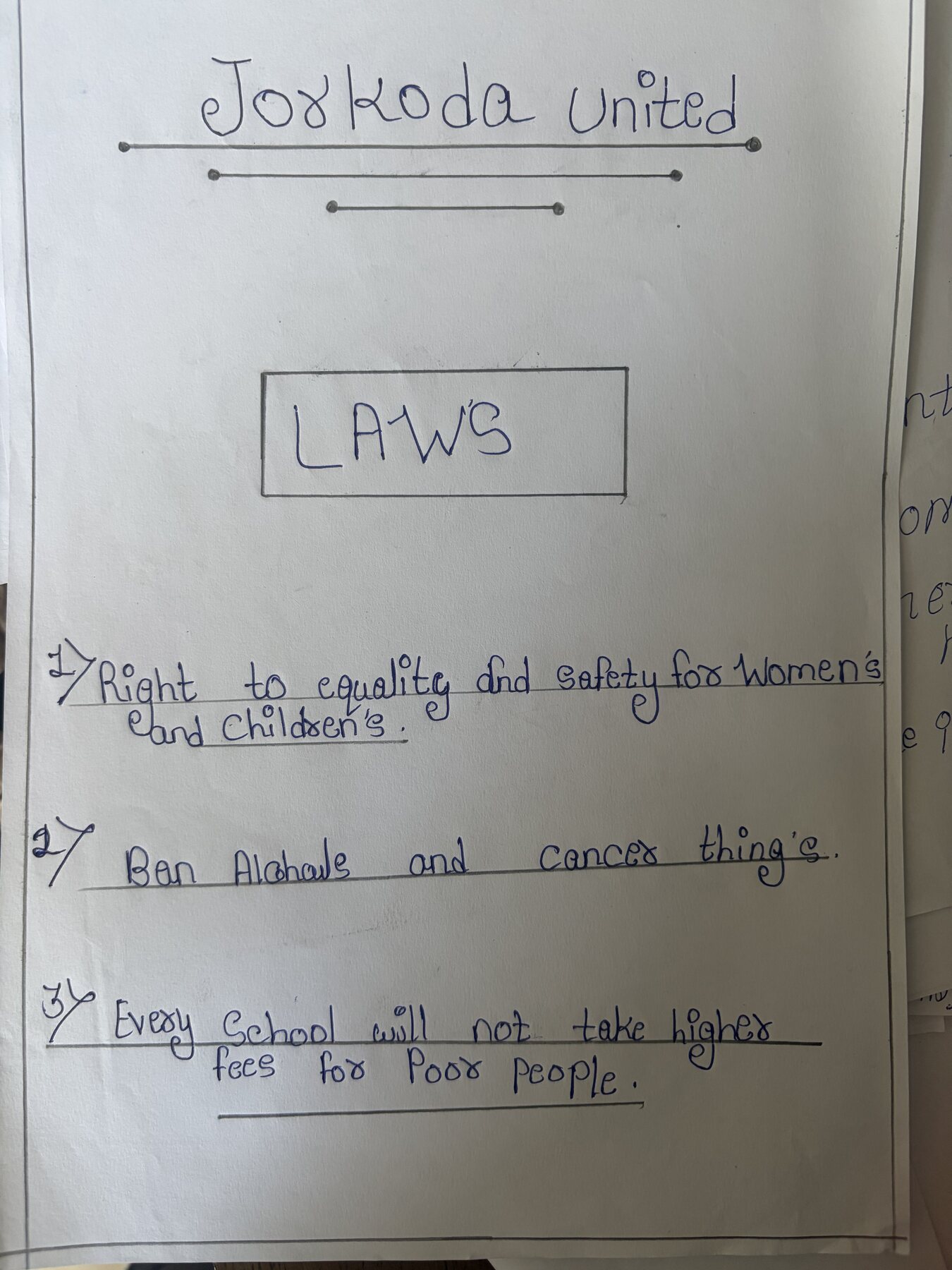
A highlight activity conducted is the Make Your Own Country activity. Students are divided into groups and tasked with creating their own imaginary nation: giving it a name, designing a flag, and writing three laws they believe their country should have. A spokesperson from each group then presents their country to the class.
The activity serves two purposes. For the students, it moves learning from passive to active: instead of simply hearing about rights and laws, they are asked to think critically about what a fair society looks like and make real decisions about it. The choices they make reveal what has genuinely landed. For me, it functions as a live assessment: the laws students choose, the reasoning they give, and the questions they raise during the presentation tell me far more about their understanding than anything could. It is one of the most reliable indicators of whether a session has had real impact.
Countries the children built